Connecticut Cottages & Gardens
The French Affair
Written by Katherine Lagomarsino
Decorator Michael Whaley brings 18th-century Parisian luxury to Greenwich
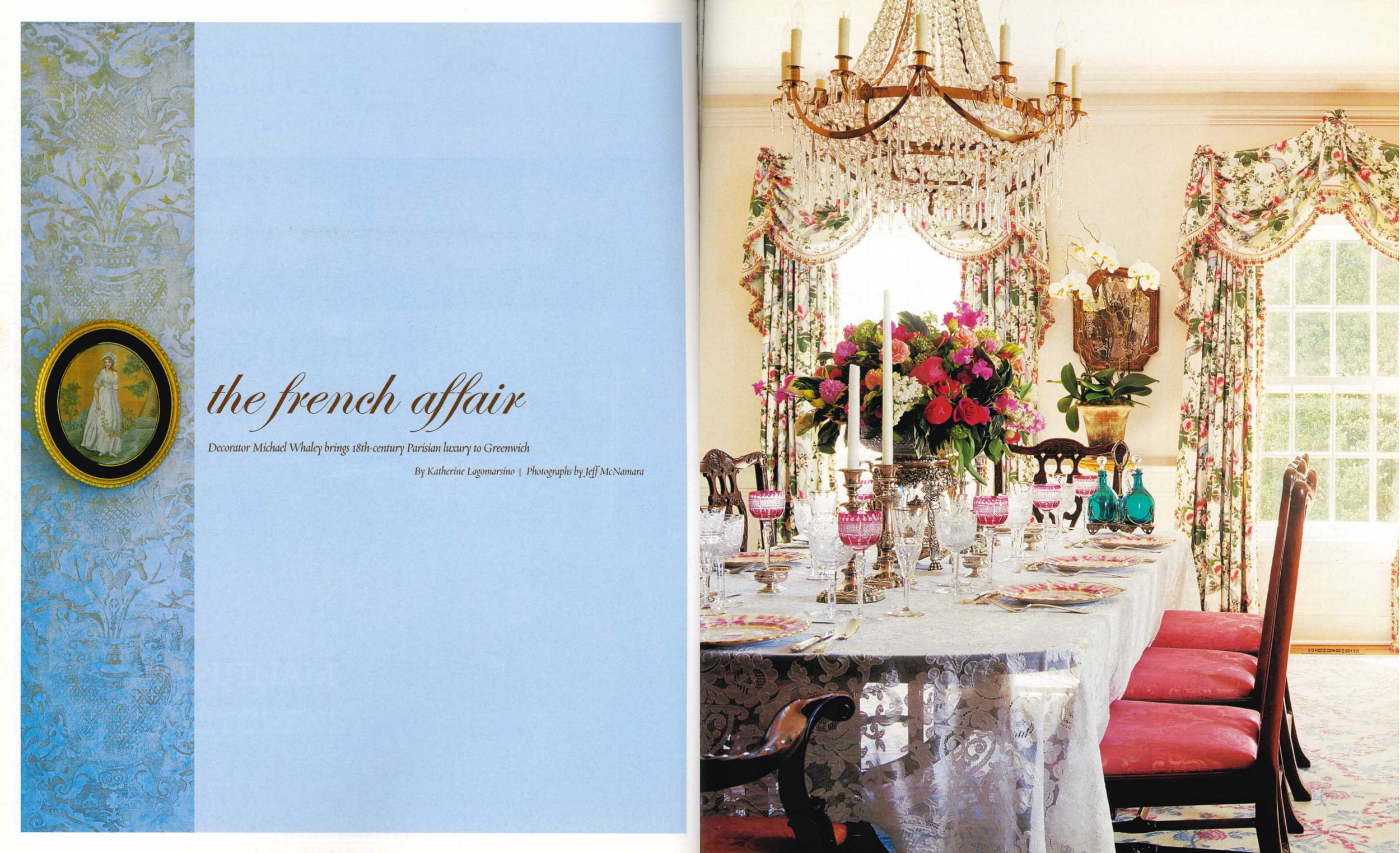
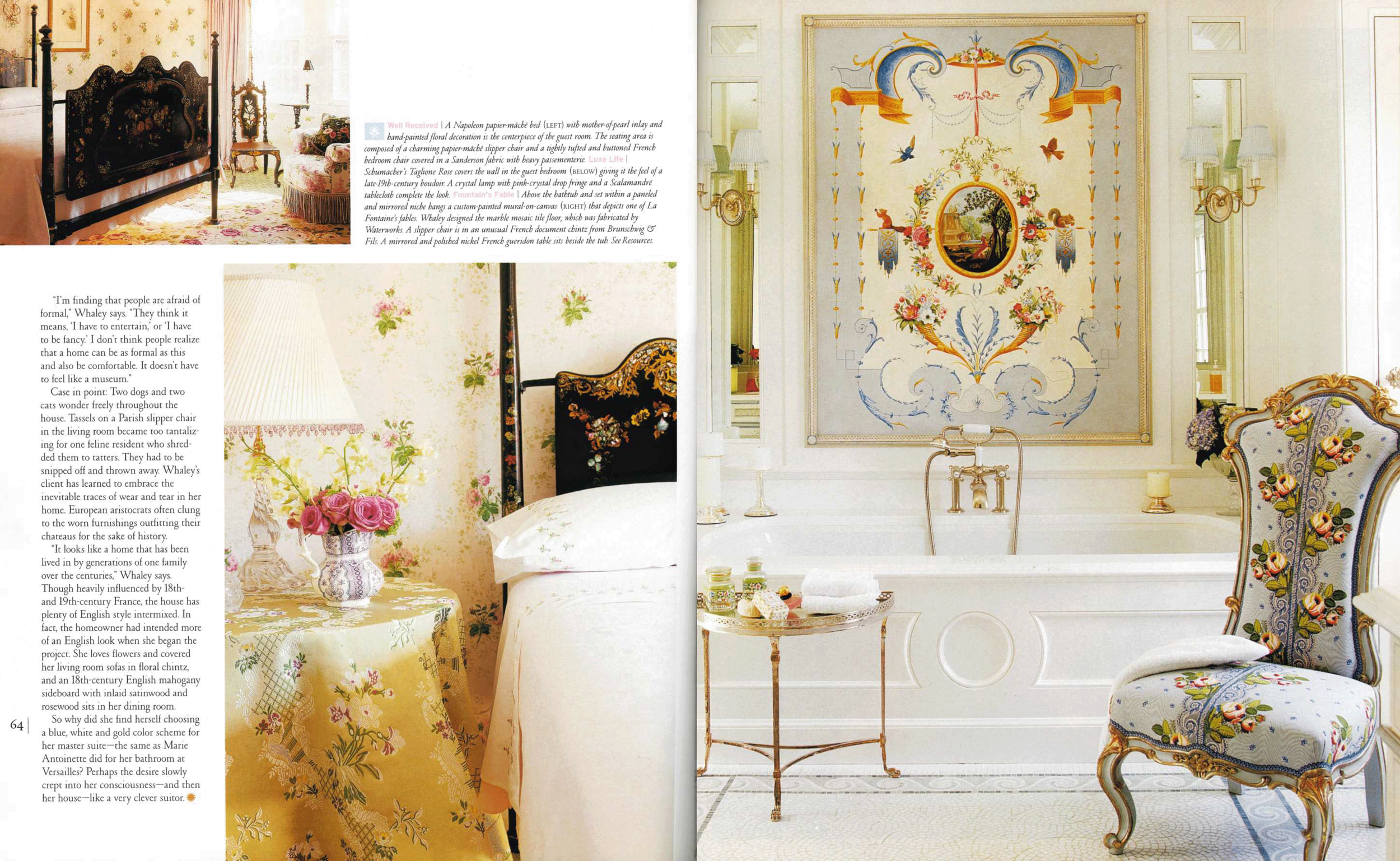
You might think interior designer Michael Whaley, or his client, had just read Choderlos de Laclos's Les Liaisons Dangereuses—or perhaps just watched the 1988 movie starring Glenn Close and her heaving bust—when he began this project in Greenwich. Was that the rustling of a damask skirt in the solarium? Did a pair of dainty Louis-style heels just tap through the foyer? Perhaps, because it would be no far stretch of the imagination to envision white-wigged French aristocrats getting into all manner of romantic scandals within the walls of this rather unassuming federal-style home.
If you caught last summer's “Dangerous Liaisons: Fashion and Furniture in the 18th Century” at the Metropolitan Museum of Art, you'd know that a home's decor at that time was not only about pleasing the eye but also about arousing and seducing a potential lover. In this case, the home has become the ultimate seductress bedecked in powder blue, pale pink and soft green trappings.
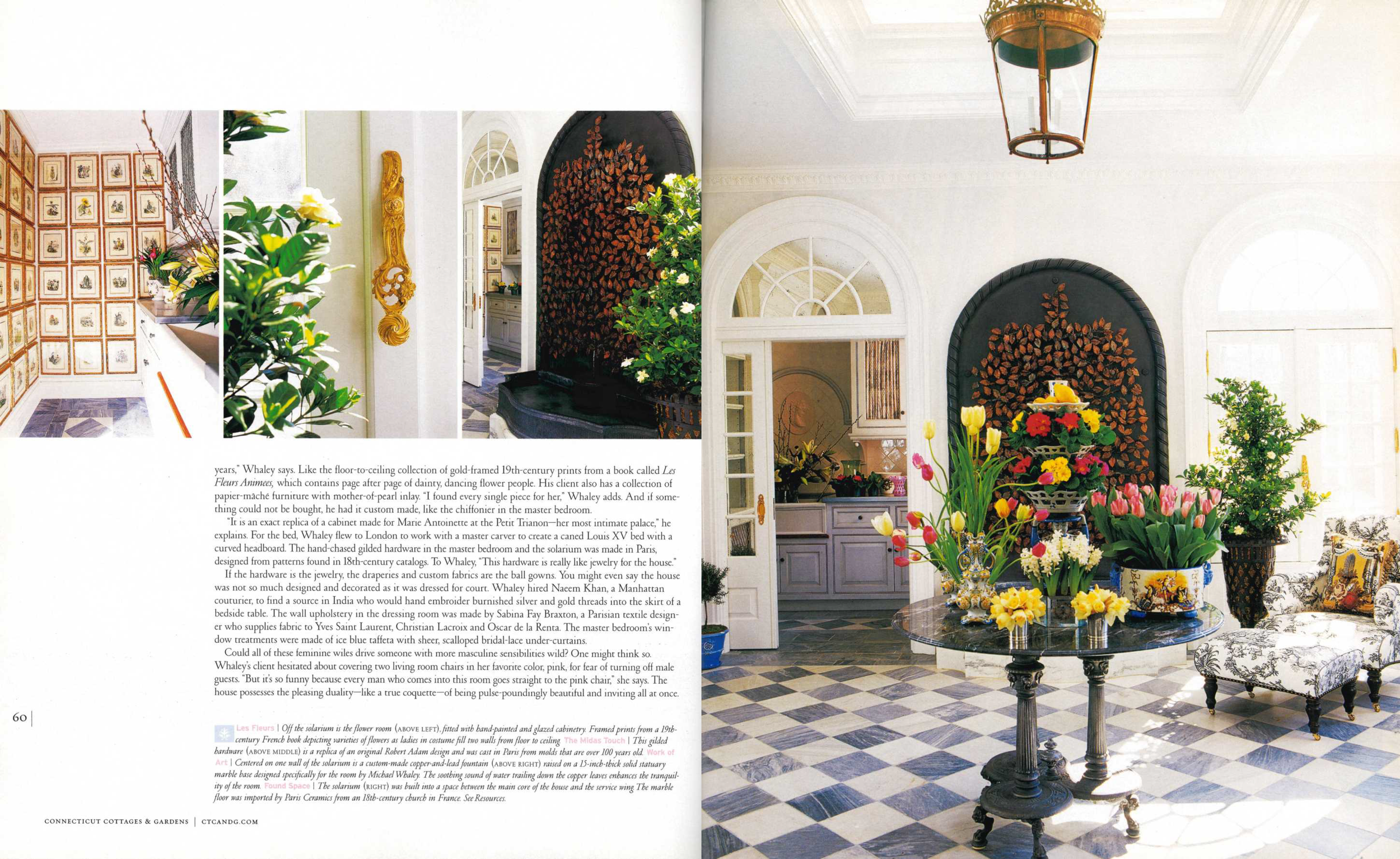
And who better co fulfill a feminine French fantasy of floral and gilt than Whaley, who cur his teeth at the famous Parish-Hadley firm during the 1980's, a time when luxury reigned. Like this home-owner, he adores layers, antique furniture and those relentless glee-inspiring tidbits that make a home engaging. If love is in the details, then this house was doted on like a new paramour. “We’ve been collecting pretty things for years,” Whaley says. Like the floor-to-ceiling collection of gold-framed 19th-century prints from a book called Les Fleurs Animees, which contains page after page of dainty, dancing flower people. His client also has a collection of papier-mâché furniture with mother-of-pearl inlay. “I found every single piece for her,” Whaley adds. And if something could not be bought, he had it custom made, like the chiffonier in the primary bedroom.
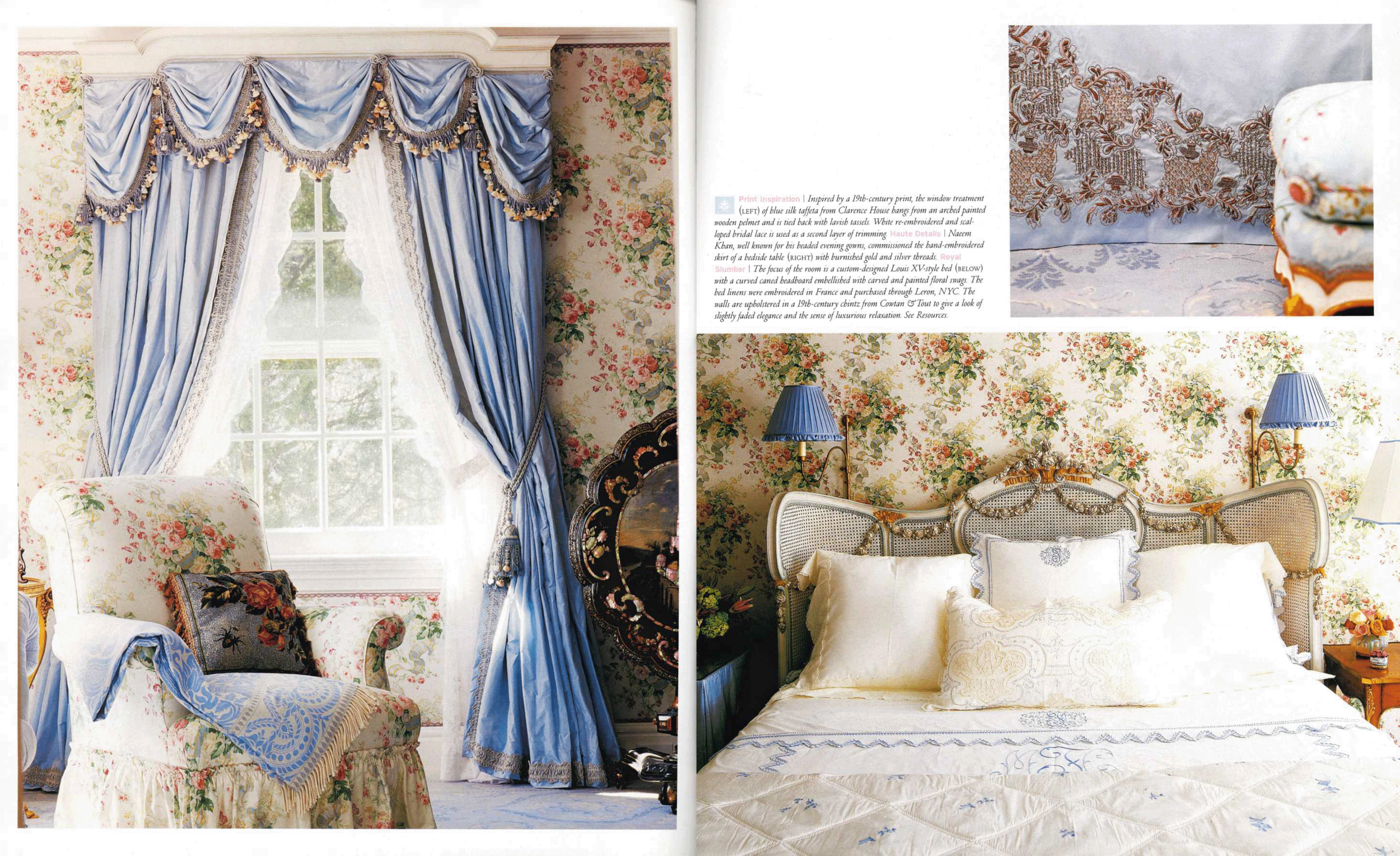
“It is an exact replica of a cabinet made for Marie Antoinette at the Petit Trianon—her most intimate palace,” he explains. For the bed, Whaley flew to London to work with a master carver to create a caned Louis XV bed with a curved headboard. The hand-chased gilded hardware in the primary bedroom and the solarium was made in Paris, designed from patterns found in 18th-century catalogs. To Whaley, “This hardware is really like jewelry for the house.”
If the hardware is the jewelry, the draperies and custom fabrics are the ball gowns. You might even say the house was not so much designed and decorated as it was dressed for court. Whaley hired Naeem Khan, a Manhattan couturier, to find a source in India who would hand embroider burnished silver and gold threads into the skirt of a bedside table. The wall upholstery in the dressing room was made by Sabina Fay Braxton, a Parisian textile designer who supplies fabric to Yves Saint Laurent, Christian Lacroix and Oscar de la Renta. The primary bedroom's window treatments were made of ice blue taffeta with sheer, scalloped bridal-lace under-curtains.
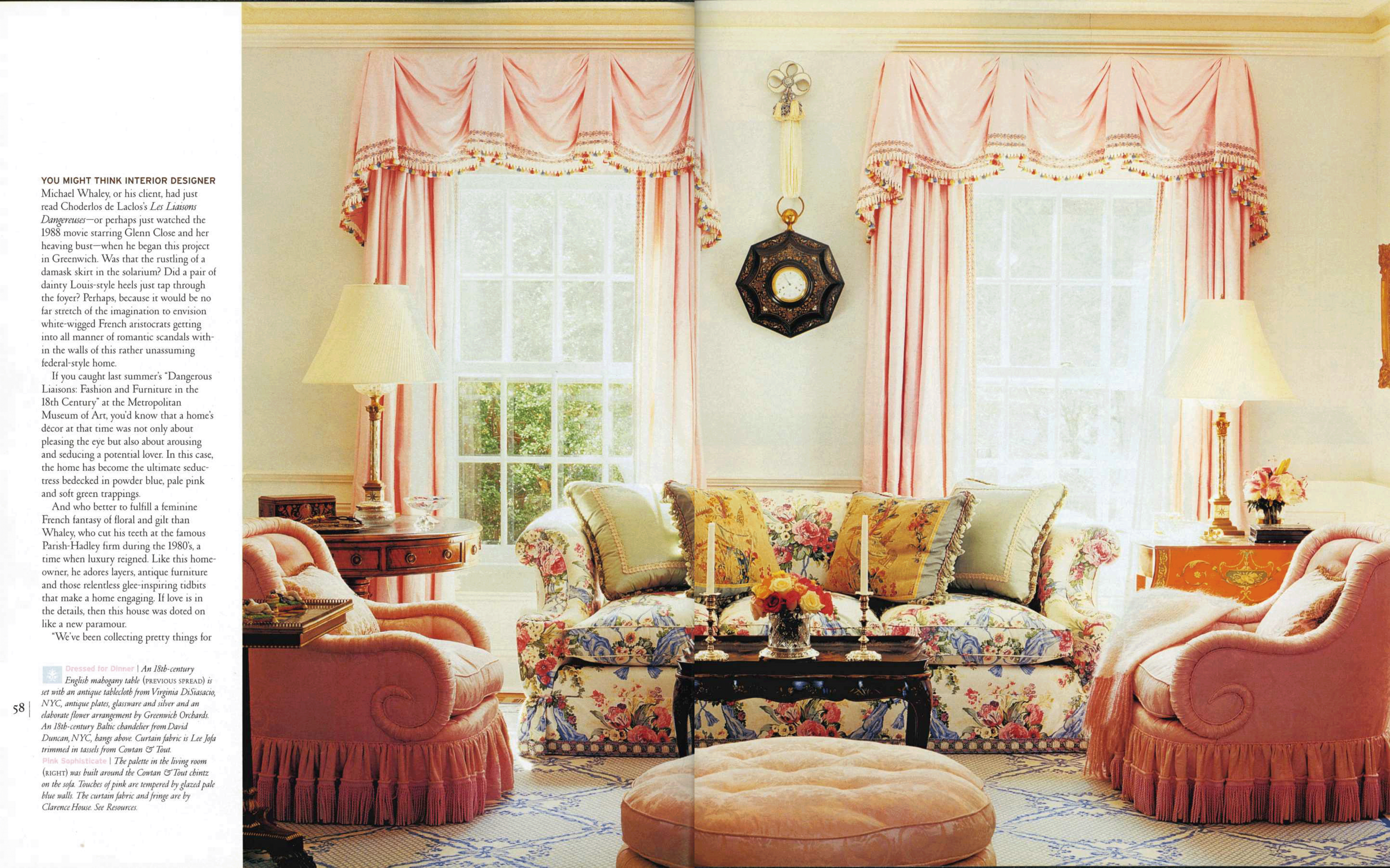
Could all of these feminine wiles drive someone with more masculine sensibilities wild? One might think so. Whaley's client hesitated about covering two living room chairs in her favorite color, pink, for fear of turning off male guests. “Bur it's so funny became every man who comes into this room goes straight co the pink chair,” she says. The house possesses the pleasing duality—like a true coquette—of being pulse-poundingly beautiful and inviting all at once.
“I’m finding that people are afraid of formal,” Whaley says. “They think it means, ‘I have to entertain,’ or ‘I have to be fancy.’ I don't think people realize that a home can be as formal as this and also be comfortable. It doesn't have to feel like a museum.”
Case in point: Two dogs and two cats wonder freely throughout the house. Tassels on a Parish slipper chair in the living room became too tantalizing for one feline resident who shredded them to tatters. They had to be snipped off and thrown away. Whaley's client has learned to embrace the inevitable traces of wear and tear in her home. European aristocrats often clung co the worn furnishings outfitting their chateaus for the sake of history.
“It looks like a home that bas been lived in by generations of one family over the centuries,” Whaley says. Though heavily influenced by 18th-and 19th-century France, the house has plenty of English style intermixed. ln face, the homeowner had intended more of an English look when she began the project. She loves flowers and covered her livmg room sofas in floral chinrz, and an 18th-century English mahogany sideboard with inlaid satinwood and rosewood sits in her dining room.
So why did she find herself choosing a blue, white and gold color scheme for her primary suite–the same as Marie Antoinette did for her bathroom at Versailles? Perhaps the desire slowly crept into her consciousness—and then her house—like a very clever suitor.